
Melbourne soil has a reputation. One street feels like a soft garden mix. The next turns into stubborn clay that grips tools like it owns the place. Add hidden rock shelves and sudden bluestone pockets, and ordinary digging becomes a slow, sweaty battle. That is exactly where post hole drilling earns respect. This kind of excavation is not just a fancy upgrade. As a practical solution.
Across Melbourne suburbs, from inner-city renovations to new builds on the fringe, stable ground matters. Fences lean. Decks sink. Retaining walls shift. The true problem often lies beneath the surface. Strong structures start with correct land clearing services in Melbourne and post hole drilling, especially in a city known for reactive soil and unpredictable ground layers.
This guide explores post hole drilling through a Melbourne lens. Clay, rock, tight blocks, structural footings, fencing projects, and modern excavation trends all come into focus. The aim is simple: clear information, grounded advice, and practical insight that actually makes sense on-site.
Why Melbourne Ground Demands Smarter Post Hole Drilling
Melbourne soil is rarely neutral. Many areas sit on highly reactive clay. This clay expands after rain and contracts during dry spells. That constant movement stresses posts and footings over time. In suburbs built on volcanic plains, rock layers appear without warning. Digging manually into that mix quickly turns into frustration.
Post hole drilling handles this complexity better than manual digging. A powered auger cuts through clay efficiently. It breaks compact soil without widening the hole unnecessarily. That precision matters because a consistent diameter improves load distribution once the concrete sets.
Where Melbourne clay soil drilling gets tough, the bore’s depth and cleanliness are what really ensure long-term stability. While sloppy holes can cause shifting, a clean cut creates a solid column that can withstand seasonal ground movement.
The Real Difference Between Digging and Post Hole Drilling
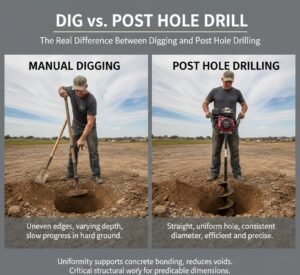
Manual digging often looks simple at first. All you need is a shovel, a post hole digger, and a bit of effort. But once compact clay or embedded rock appears, progress slows. The hole’s edges crumble. The depth becomes uneven. Extra labor rarely improves accuracy.
Post hole drilling changes the dynamic. The auger rotates with controlled torque. Soil exists vertically. The hole remains straight and uniform. That uniformity supports concrete bonding and reduces voids.
For structural work such as piling and bored piers, a uniform bore diameter is critical. Engineers rely on predictable dimensions. Guesswork does not belong in load-bearing installations.
Even in smaller residential jobs, fencing contractors in Melbourne prefer mechanical drilling for consistency. Straight posts begin with straight holes.
Melbourne Clay Soil Drilling: Understanding the Movement
Clay soil behaves differently from sandy ground. It holds moisture, swells, and then shrinks as it dries. This cycle causes ground movement that affects shallow footings.
Effective Melbourne Clay Soil Drilling requires drilling below the active movement zone, where possible. The deeper the bore reaches stable strata, the less influence surface changes have on the post. That principle applies strongly in retaining wall post holes, where soil pressure increases over time.
Post Hole Drilling in clay also benefits from correct auger selection. Narrow bits struggle to clear compacted soil. Wider augers reduce friction and prevent the sides from collapsing inward before concrete placement.
Local building authorities categorize soil and offer specific footing advice. Most pros rely on the Victorian Building Authority foundation guides to figure out the right depths and soil requirements:
Rocky Ground: When Post Hole Drilling Becomes Technical
Rock introduces a different challenge. In parts of Melbourne, bluestone shelves lie just below topsoil. Attempting manual excavation in rock damages tools and wastes time.
Professional posthole drilling involves the use of rock augers with tougher cutting edges. Pilot holes or rock breakers are used in more difficult rock formations. Drilling is controlled to avoid holes becoming larger than necessary.
Piling and bored piers in rocky zones demand even greater precision. Engineers calculate bearing capacity based on rock density. Clean bores allow reinforcement cages to sit properly before concrete pouring.
Rock work increases equipment wear and labor time. That factor explains why pricing varies between soft clay sites and rock-heavy blocks.
Retaining Wall Post Holes Depth Is Not Optional
Retaining walls hold soil under constant lateral pressure. On sloped Melbourne blocks, that pressure increases during heavy rain. Shallow holes weaken over time.
Retaining wall post holes usually require deeper post hole drilling compared to standard fence installations. The additional depth anchors steel posts below the movement zone and distributes pressure evenly.
Proper drainage design also matters. Even perfect drilling cannot compensate for trapped water behind a wall. Combined planning ensures long-term structural stability. In many suburban developments, retaining walls separate tiered yards. Strong Retaining Wall Post Holes prevent costly rebuilding years later.
Tight Access Excavation in Melbourne Urban Blocks
Melbourne’s inner suburbs often present narrow side paths and limited entry points. Standard excavators simply cannot fit.
Tight Access Excavation equipment solves that issue. Compact machinery fitted with hydraulic augers performs post hole drilling in confined areas without extensive landscaping removal. This method protects existing gardens and paving. It also reduces project timelines because less reinstatement work follows.
Tight access excavation enables homeowners undertaking renovations or extensions to drill efficiently without causing damage to nearby structures.
Manual Digging vs Proper Drilling
Let’s be honest. A shovel works for garden beds. It struggles for structural footings.
Manual digging in clay becomes exhausting. In rocky ground, it becomes nearly impossible. That is where posthole drills change the outcome.
| Method | Speed | Accuracy | Physical Strain | Structural Reliability |
| Manual Shovel | Slow | Low | Very High | Inconsistent |
| Basic Auger | Moderate | Medium | Moderate | Good |
| Professional Post Hole Drilling | Fast | High | Minimal | Excellent |
Melbourne conditions reward precision over effort.
Auger Hire Melbourne: Weighing DIY Against Professional Work
Auger Hire Melbourne options give you the gear needed for smaller jobs. A simple one-man auger usually does the trick for basic fencing, provided the soil isn’t too stubborn.
However, Melbourne clay soil drilling and rocky terrain often require heavier machinery. Inexperienced operation can result in misaligned holes or injury. Post hole drilling appears straightforward, but requires control, especially when drilling multiple holes along a precise fence line. Even slight angle variations cause visible alignment problems later.
Cost savings from Auger Hire Melbourne sometimes disappear when corrective work becomes necessary.
Common Mistakes in Post Hole Drilling
Even experienced DIY builders make these errors:
- Not drilling deep enough
- Uneven hole diameter
- Allowing soil collapse
- Ignoring clay expansion
- Skipping service checks
Professional posthole drilling eliminates these risks through process and equipment.
Piling and Bored Piers: Structural Foundations That Last
Piling and bored piers require deeper post hole drilling to form reinforced concrete supports. These piers shift the weight of decks or extensions down into much more stable soil layers.
Depth varies depending on soil report recommendations. In reactive clay zones, deeper bores reduce movement risk. Steel reinforcement cages placed inside drilled holes increase tensile strength. Concrete fills the void, bonding with the surrounding soil.
More new homes are using piling and bored piers these days because Melbourne’s ground is so reactive. In the end, lasting stability is worth far more than saving a few bucks upfront.
Cost Factors in Post Hole Drilling Across Melbourne
Post Hole Drilling pricing reflects several site-specific variables. Soil composition remains the largest influence. Clay requires effort but remains predictable. Rock increases labor and equipment wear.
Size matters for the budget, too. Wider holes take more time to drill and swallow more concrete, while deeper holes naturally drive up both labor and material costs. Tight Access Excavation sites may involve compact machinery, which can alter pricing structures.
However, access limitations often justify the investment due to reduced manual labour.
Transparent quoting builds trust. Reputable operators assess soil conditions before confirming pricing.
Safety and Underground Services
Before any post hole drilling begins, underground services must be identified. Gas lines, electrical cables, water mains, and communication conduits run beneath many Melbourne properties.
Accidental strikes carry serious consequences. Professional operators verify service locations and follow strict safety procedures.
Planning for Accurate Post Hole Drilling
Accurate Post Hole Drilling begins with measurement and layout. String lines establish alignment. Marked centers ensure even spacing.
Depth targets must align with structural requirements. Over-drilling wastes material. Under-drilling compromises strength. Concrete curing time also influences project scheduling. Posts must remain undisturbed until the mix achieves sufficient strength.
The Aesthetic Factor
Beyond structural strength, neat post hole drilling contributes to visual appeal. Straight fence lines enhance property presentation. Level retaining walls elevate landscaping.
Melbourne homeowners increasingly prioritize clean finishes and long-term durability. Precision drilling supports both. In contemporary outdoor design, sharp lines and minimalism dominate. Structural elements must align visually as well as technically.
Long-Term Benefits of Professional Post Hole Drilling
Correct Post Hole Drilling reduces maintenance issues. Posts remain upright. Walls resist pressure. Decks stay level.
The upfront investment protects property value and reduces future repair costs. In Melbourne’s competitive housing market, structural integrity influences buyer confidence. Foundations matter.
Conclusion
Melbourne soil does not reward shortcuts. Clay shifts. Rock resists. Shallow digging leads to leaning fences and cracked walls.
Post hole drilling provides precision, strength, and confidence beneath every structure. From simple fencing to engineered piling and bored piers, correct drilling forms the backbone of lasting construction.
Contact a qualified post hole drilling specialist, and contact us today to request a detailed quote tailored to the site conditions. Solid foundations begin below the surface.
Frequently Asked Questions
1. How deep should post hole drilling go in Melbourne clay soil?
Your post hole drilling depth depends on the soil type and the job at hand. For Melbourne clay soil drilling, you generally have to get below the “active” layer to stop the ground from shifting your build. Heavier structural work, like piling and bored piers will need even deeper bores based on the engineering specs.
2. Is Auger Hire Melbourne suitable for rocky sites?
While Auger Hire Melbourne works for soft dirt, rocky terrain usually demands specialized gear and a pro behind the controls. Hiring post-hole drilling experts ensures the bores are clean and saves your equipment from getting thrashed when you hit rock.
3. Why are retaining wall post holes deeper than fence holes?
Retaining Wall Post Holes must resist constant lateral soil pressure. Deeper post-hole drilling anchors the structure into stable ground, preventing long-term movement and failure.
4. When is tight access excavation required?
Tight Access Excavation becomes necessary on narrow Melbourne blocks where large machinery cannot enter. Compact equipment allows accurate posthole drilling without damaging landscaping or neighboring structures.
5. Are piling and bored piers necessary for decks in Melbourne?
Piling and bored piers improve deck stability, especially in reactive clay areas. Deeper post hole drilling transfers structural loads into stable soil layers, reducing movement over time.
6. Does rock significantly increase posthole drilling costs?
Yes. Rock requires hardened auger bits and longer drilling time. Post hole drilling in rocky Melbourne terrain typically involves additional labor and equipment wear, affecting overall pricing.
