
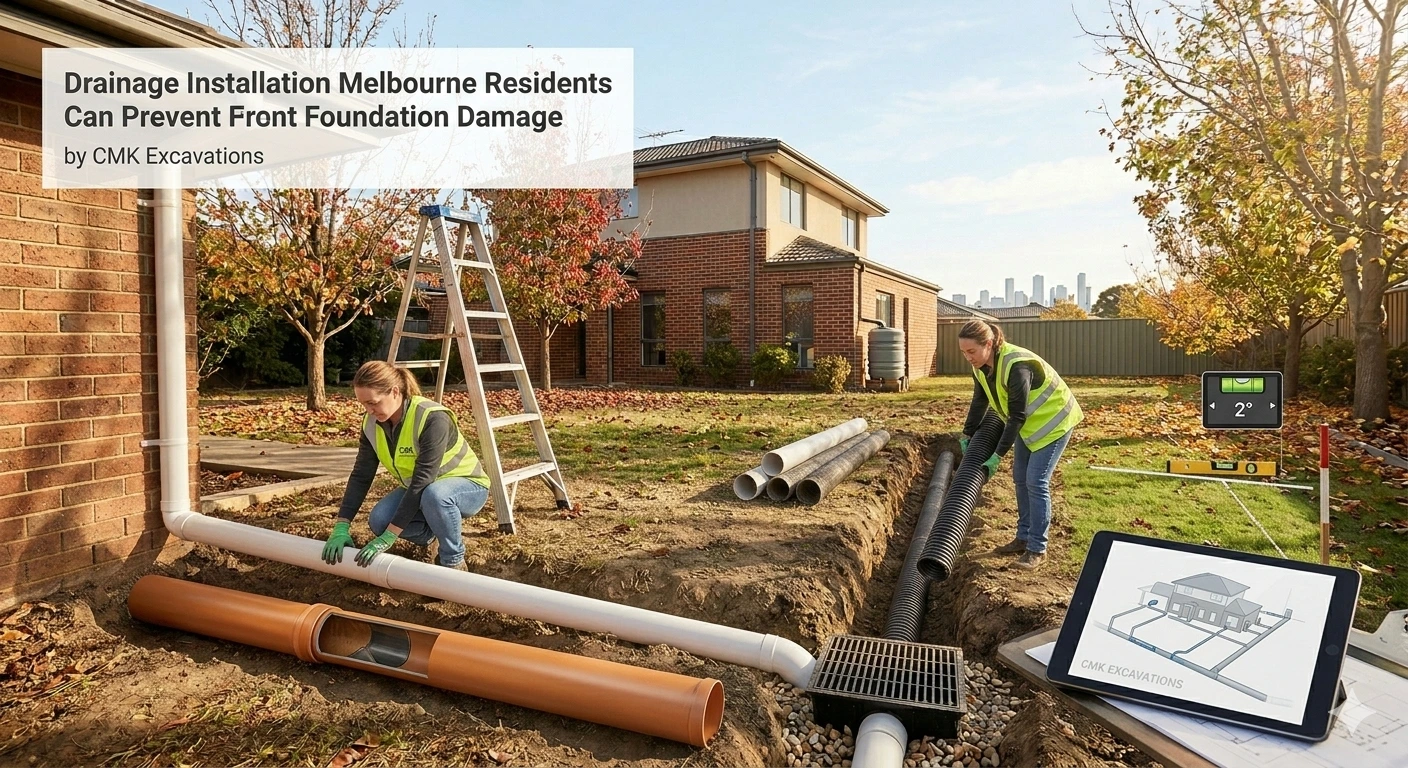
Cold months in Australia bring more than cosy mornings and heavy jackets. Rainwater, soil movement, and blocked pipes quietly create problems under homes. Many properties face cracks, damp floors, and sinking ground simply because a professional drainage installation Melbourne system was ignored for too long.
Proper Drainage Installation Melbourne planning plays a major role in keeping homes stable during winter, and using a Post Hole Drilling Guide ensures foundations and drainage points are correctly positioned. Strong drainage systems control water flow, protect foundations, and reduce costly repairs; without the right setup, rainwater collects near walls, soil expands, and structural damage begins.
Modern homeowners now look at drainage solutions Melbourne not only as a repair method but as a long-term investment. The goal is simple: keep water moving away from the house, keep soil firm, and keep the building safe.
Why most homes fail due to bad water planning
On-site visits: the biggest surprise for homeowners is how small planning errors turn into large repair bills.
Many houses are built on leveled soil without thinking about where rainwater will go. Builders finish the structure, landscapers shape the yard, and only after the first heavy rain does anyone realize water has nowhere to escape.
A common mistake is assuming the ground will absorb everything. That works in sandy areas, but much of Melbourne sits on clay-based soil. Clay holds water, expands, and then pushes against foundations. The house itself might be built perfectly, yet the soil underneath starts moving because water keeps collecting in the wrong place, often due to the lack of a specialized Drainage Installation Melbourne plan designed for heavy soil.
Another issue comes from mixing trades without coordination. One contractor installs gutters, another installs paving, and someone else handles pipes. Each job works on its own, but together they create a system that fights itself. Water gets trapped between surfaces, flows back toward the house, or overloads drains that were never sized for real rainfall.
Cost vs Damage: Why Drainage Installation Melbourne Saves Money
Some homeowners delay drainage work because of cost, but ignoring water problems usually leads to bigger expenses later.
| Problem | Average Repair Cost | With Drainage |
| Foundation crack | High | Preventable |
| Damp walls | Medium | Preventable |
| Soil erosion | High | Preventable |
| Flooded yard | Medium | Preventable |
Strong Drainage Installation Melbourne planning protects the building, reduces repair bills, and increases property value. Buyers often prefer homes with proper drainage because the risk of damage is lower.
Drainage Installation Melbourne on older properties
Older houses often present more drainage problems than new builds, even if the structure itself looks solid.
Many of these homes were built before current stormwater rules existed, and the original drainage was designed for lighter rainfall and smaller roof areas. Extensions, new driveways, and landscaping changes usually make the situation worse.
During repairs, it becomes clear that earlier systems were simple and sometimes improvised. Pipes were placed where it was easiest, not where water naturally wanted to go. Over time, soil settles, levels change, and the original slope disappears, which is why a professional Drainage Installation Melbourne is necessary to ensure water flows away from the building instead of back toward it.
Fixing drainage on an older property rarely means replacing one pipe. It often means rethinking the entire layout. That can feel excessive to homeowners, but partial fixes usually fail. Installing one new drain while leaving the rest untouched often pushes the problem to another part of the yard instead of solving it.
Winter rainfall and soil movement around foundations
Winter exposes drainage problems faster than any other season, often necessitating professional drainage installation Melbourne property owners rely on to protect their foundations.
Long periods of steady rain soak the ground deeper than short storms do; once the soil stays wet for days, pressure builds under slabs and around footings. This is when doors stop closing properly, and small cracks start appearing.
Clay soil is the biggest troublemaker in this situation; when dry, it shrinks and leaves gaps, but when wet, it expands and presses against the foundation, making the specialized drainage installation Melbourne soils require absolutely critical. Houses built on reactive soil need controlled water flow, but many properties rely only on surface runoff, which is never enough during the heavy winter months.
To prevent structural issues, we must manage the surprising amount of rain that large modern roofs collect in accordance with Victoria stormwater management requirements. If downpipes discharge too close to the house, the ground saturates quickly; often, what looks like a structural failure is simply too much water being dumped in the wrong place.
Winter Water Damage Prevention Starts Before the Rain
Waiting for winter before fixing drainage is risky. Preparation should happen during dry months so the system works when rain starts.
Steps for preventing water damage in winter:
- Clean gutters regularly
- Check stormwater pipes
- Inspect the ground slope
- Repair cracked drains
- Upgrade old systems
Regular inspection keeps residential drainage systems Melbourne working properly. Preventive maintenance always costs less than structural repair.
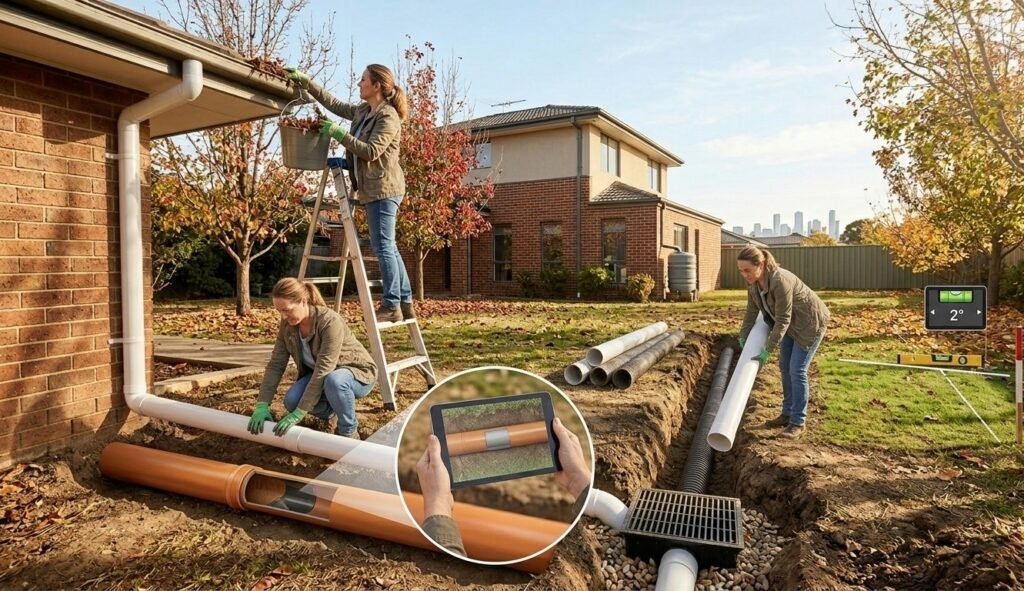
Surface slope mistakes that cause water build-up
One of the most common field problems has nothing to do with pipes at all; rather, the ground itself is shaped incorrectly. Landscaping work sometimes looks perfect, but pushes water toward the house instead of away from it, highlighting why proper drainage installation Melbourne experts recommend is vital for structural health. Even a small slope error can send hundreds of litres of water straight to the foundation.
Driveways create similar trouble. Concrete or paving changes how water flows, and if the slope is wrong, rainwater runs toward the garage or walls. Many drainage repairs start after a new driveway is installed. The driveway works fine on its own, but it blocks the natural path water used to follow.
Correcting slope mistakes can be harder than installing pipes. Soil has to be regraded, edges adjusted, and sometimes retaining barriers added. Homeowners often expect a quick fix, but reshaping ground levels is slow work. Skipping this step and relying only on drains usually leads to the same problem returning next winter.
Why cheap drainage fixes often fail in winter
Quick fixes are popular because they seem affordable, but they rarely last. Adding one extra drain or extending a pipe might remove water from one spot, yet the overall system stays unbalanced. During heavy rain, water simply finds the next weak point and collects there instead.
Another mistake is using pipes that are too small. On paper, the size looks enough, but real rainfall doesn’t behave neatly; leaves, dirt, and small debris reduce flow quickly, which is why a high-quality drainage installation Melbourne must account for these variables. Once the pipe cannot handle the volume, water backs up and starts soaking into the ground around the house.
Some homeowners also rely on temporary channels or surface grates without a proper underground connection, but for a lasting solution, a comprehensive drainage installation Melbourne homes require must provide more than just a temporary fix. These work for light rain but fail during long storms; a proper system needs continuous flow from roof to outlet, not just a place for water to sit until it overflows.
How contractors misjudge stormwater capacity limits
Stormwater systems are often designed using average rainfall rather than worst-case conditions, but skipping the robust drainage installation Melbourne weather demands often leaves no margin for unusual storms.
That approach keeps costs lower initially, but when heavy rain hits, the system reaches its limit quickly, and water starts escaping where it shouldn’t.
Another issue appears when multiple downpipes connect to a single line that was never meant to carry that much water, a common oversight that a professional drainage installation Melbourne service would typically avoid. Everything works fine most of the year, so the problem stays hidden; then one strong storm fills the pipe faster than it can drain, and water rises back toward the house.
Capacity mistakes also happen when extensions are added later. The original drainage might have been correct for the old roof size, but after adding rooms or a pergola, the water load increases. If the drainage is not upgraded at the same time, the system becomes overloaded without anyone noticing.
Real cost differences between repair and installation work
People often delay drainage work because installation feels expensive, yet what usually surprises them is how much more a professional drainage installation Melbourne saves them in the long run.
What usually surprises them is how much more repair work costs after damage begins; fixing a cracked slab, replacing flooring, or stabilizing a foundation can easily exceed the price of proper drainage.
Repair work also takes longer. Installing drainage during construction or early maintenance is straightforward because everything is accessible. Once the house is finished, digging becomes harder, access is limited, and extra care is needed to avoid damaging existing structures.
There is also the cost of inconvenience that nobody plans for, especially when delaying the professional drainage installation Melbourne properties actually need. Living with damp floors, blocked drains, or constant patch repairs becomes frustrating; homeowners sometimes spend years fixing symptoms instead of solving the cause, which ends up costing more than doing the job properly once.
Practical limits of residential drainage systems
Even the best drainage system has limits, and while a professional drainage installation Melbourne provides essential protection, some homeowners expect the yard to stay completely dry no matter how much rain falls. That is not realistic, especially in areas with heavy clay soil; the goal of drainage is control, not perfection.
Another misunderstanding is that thinking more pipes always means better results. Too many connections can actually slow the system down if the layout is wrong. Water needs a clear path, not a complicated network that traps debris or reduces flow speed.
Maintenance also plays a bigger role than people expect, as leaves, dirt, and small roots gradually reduce pipe capacity and compromise the drainage installation Melbourne properties rely on for long-term safety. A system that worked perfectly when installed can fail after a few years if nobody checks it; good drainage design always assumes regular inspection will be needed.
What experienced installers check before digging
Before any digging starts, experienced installers spend time studying the site. They look at soil type, roof size, existing pipes, and natural slope. Skipping this step is one of the main reasons drainage jobs fail later. Without understanding how water already moves, it is impossible to control it.
Another detail professionals watch closely is where the water will end up. Sending water away from the house is only half the job. The outlet must be legal, safe, and able to handle the flow. Poor outlet planning can create problems for neighbors or cause flooding in another part of the property.
Weather patterns also influence decisions. Some areas receive short heavy storms, while others get long steady rain. The system has to match local conditions, not just standard measurements. Good drainage work looks simple after it is finished, but the planning behind it is rarely simple
Conclusion
Winter rain in Melbourne can quietly damage foundations, walls, and soil without warning. Proper Drainage Installation Melbourne keeps water away from the structure, protects the ground, and prevents expensive repairs.
Modern drainage solutions Melbourne, strong foundation protection, and correct stormwater drainage installation create a safe system that works for years. Ignoring drainage may seem harmless at first, but long-term damage often costs far more than installation.
Contact us today to schedule a professional inspection before winter arrives.
Frequently Asked Questions
1. Why is Drainage Installation Melbourne important for winter?
Drainage Installation Melbourne helps control rainwater around the house during winter. Without proper drainage, water collects near the foundation, causing cracks, dampness, and soil movement. A strong system directs water away safely and reduces the risk of structural damage, making winter water damage prevention much easier.
2. What are the best drainage solutions Melbourne homes use?
Common drainage solutions Melbourne includes French drains, stormwater pipes, channel drains, and soak wells. Each system controls water differently depending on soil and slope. Professional planning ensures the correct combination is used, which improves foundation protection in Melbourne and prevents long-term damage.
3. How does poor drainage cause foundation damage?
Water staying near the house makes soil expand and shrink; this movement pushes against the foundation and creates cracks, making the professional drainage installation Melbourne requires essential for moving water away quickly and keeping the ground stable even during heavy rain.
4. When should stormwater drainage installation be done?
Stormwater drainage installation should be done before winter begins. Installing pipes during dry weather allows proper testing and adjustment. Correct installation ensures rainwater from the roof flows safely into drains instead of collecting near the walls or yard.
5. Can drainage systems prevent soil erosion in Melbourne?
Yes, proper soil erosion prevention Melbourne planning stops rainwater from washing soil away, a key component of the high-quality drainage installation Melbourne projects require to keep the ground firm. Drainage pipes, gravel trenches, and correct slope design provide the necessary support that helps the foundation stay strong and prevents uneven floors or wall cracks.
6. How often should residential drainage systems Melbourne be checked?
Residential drainage systems Melbourne should be inspected at least once a year, especially before winter. Checking gutters, pipes, and ground slope helps find blockages or damage early. Regular maintenance keeps the system working properly and avoids expensive repairs later.
