
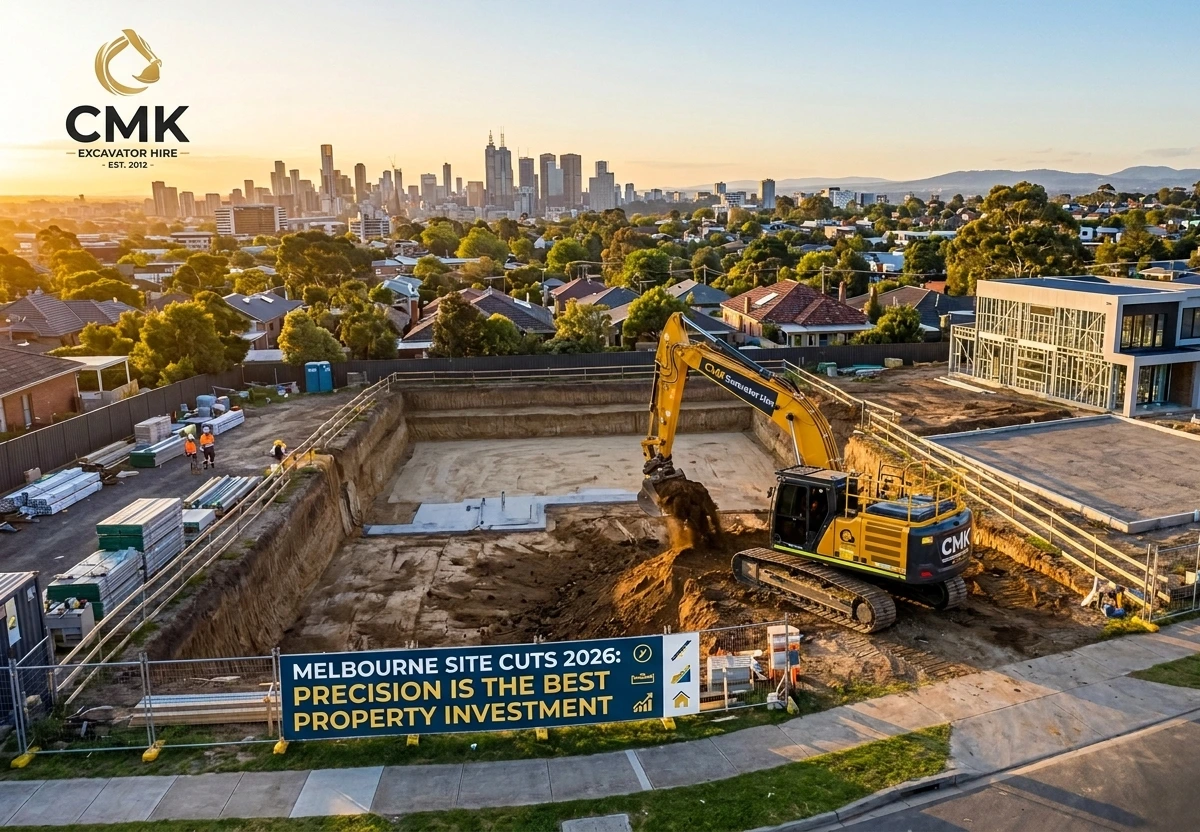
The Melbourne property market in 2026 continues to evolve, with high-density living and complex architectural designs becoming the standard. At the heart of every successful construction project lies the foundational stage of site cuts. Whether you are building a boutique townhouse in the inner suburbs or a sprawling family home in the outskirts, the accuracy of your initial earthworks dictates the longevity, safety, and cost-effectiveness of the entire build.
Precision in these early stages is no longer just a luxury; it is the most critical investment a property owner can make to ensure a level, stable, and compliant foundation.
Starting your project with the right equipment is just as important as the plan itself. If you are managing your own project or looking for reliable machinery to handle tough Victorian soil, exploring professional Excavator Hire Melbourne options is the best way to ensure your site is prepared to the highest industry standards.
Understanding the Role of Site Cuts in Modern Construction
In its simplest form, a site cut is the process of removing soil and rock from a specific area to create a level pad for a building’s foundation. However, in 2026, the definition has expanded to include sophisticated topographic analysis and soil stabilization.
Why Precision Matters More Than Ever
Precision in site cuts prevents “slab heave,” a common issue in Melbourne’s reactive clay soils where the ground expands and contracts, potentially cracking the concrete slab. By ensuring the cut is exact to the millimetre, builders can follow engineering specifications perfectly, reducing the risk of structural failure down the line.
The Impact on Your Budget
An imprecise cut often leads to “over-excavation.” When too much soil is removed, it must be replaced with expensive structural fill or additional concrete. By investing in professional site cuts, you save money by using exactly the amount of materials required by your engineering plan.
The Evolution of Excavation Site Preparation Melbourne
The landscape of excavation site preparation Melbourne has been transformed by technology. Gone are the days of “eyeballing” a level surface; today’s projects rely on GPS-guided machinery and laser levels.
Incorporating 3D Modelling
Modern earthworks teams now use 3D site modelling to visualize the terrain before a single bucket of dirt is moved. This allows for:
- Accurate volume calculations for soil removal.
- Identification of underground utility risks.
- Optimal drainage planning to prevent water pooling.
Environmental Considerations in 2026
Sustainability is a massive focus for Melbourne construction this year. Advanced site cuts techniques now prioritize “cut and fill” balance where soil removed from the high side of a slope is used to level the low side minimizing the need for off-site soil disposal and reducing the carbon footprint of the project.
Residential Site Cuts: Building a Home That Lasts
When it comes to residential site cuts, the stakes are incredibly high. For most Victorians, their home is their largest asset. A faulty start can lead to years of maintenance headaches.
Navigating Melbourne’s Diverse Soil Profiles
Melbourne’s geology varies wildly, from the volcanic basalt in the western suburbs to the sandy loams of the southeast.
- Western Suburbs: Often require heavy-duty rock breaking.
- Eastern Suburbs: May require extensive drainage solutions due to hilly terrain.
- Bay side Areas: Focus on stabilizing sandy foundations.
The Importance of Retaining Walls
If your site cuts involve a significant slope, the integration of retaining walls is essential. These structures hold back the earth and prevent erosion. In 2026, many homeowners are choosing to integrate these walls into their landscape design, turning a structural necessity into an aesthetic feature.

Earthworks and Land Levelling Melbourne: Technical Requirements
For any large-scale development, earthworks and land levelling Melbourne professionals must adhere to strict local council regulations. These ensure that the leveling of one lot doesn’t negatively impact the drainage or stability of a neighbouring property.
Site Benchmarking
A benchmark is a fixed point of reference. During the levelling process, all measurements are taken from this point to ensure the slab height aligns with the street level and sewage connections.
Key Steps in the Levelling Process:
- Site Clearing: Removing vegetation and debris.
- Topsoil Stripping: Saving nutrient-rich soil for future landscaping.
- Bulk Excavation: Removing the majority of the earth.
- Final Trim: Fine-tuning the surface for the concrete pour.
Comparing Professional vs. DIY Site Cuts
| Feature | Professional Site Cuts | DIY / Inexperienced Operators |
| Accuracy | Laser and GPS guided (±10mm) | Manual sighting (High error margin) |
| Equipment | Modern, high-performance fleet | Older, less efficient machinery |
| Speed | Completed in 1-3 days | Can take weeks |
| Compliance | Meets all Melbourne council codes | Risk of fines or stop-work orders |
| Cost | Fixed quote, no surprises | Hidden costs in over-filling slab |
Essential Equipment for Superior Site Cuts
To achieve the level of precision required in 2026, the right machinery is non-negotiable. Using outdated equipment can lead to uneven surfaces and wasted time.
The Rise of Mini Excavators
In Melbourne’s increasingly cramped suburbs, mini excavators have become the stars of site cuts. They can navigate narrow side-alleys to reach backyards, making them perfect for pool excavations or secondary dwelling preparations.
High-Tonnage Machines for Bulk Earthworks
For larger residential developments, 20-ton excavators are used for the initial heavy lifting. These machines move massive amounts of earth quickly, ensuring the project stays on schedule.
Attachments That Make a Difference
Modern site cuts are made easier with:
- Tilt Buckets: For creating precise batters and slopes.
- Augers: For drilling pier holes in the foundation.
- Rock Breakers: Essential for Melbourne’s rocky northern corridor.
For a deeper look into the technical aspects of Victorian construction standards, you can refer to the Victorian Building Authority (VBA) for the latest building practice notes.
Strategic Planning: Why “Cheap” is Often Expensive
In the world of site cuts, a low initial quote can be a red flag. If a contractor doesn’t account for rock strikes or proper soil compaction, the “savings” will quickly vanish when the builder arrives and refuses to pour the slab on an uncertified site.
The Hidden Costs of Poor Excavation
- Extra Concrete: A slab that is 50mm too deep across a standard house can cost thousands in extra concrete.
- Drainage Issues: Improperly levelled sites lead to “ponding,” which can rot wooden frames and attract termites.
- Delays: If a site cut fails inspection, the entire construction schedule is pushed back.
Investing in Soil Reports
Before any site cuts begin, a soil report is vital. This document tells the excavator exactly what lies beneath the surface, allowing them to provide an accurate quote and select the right machinery for the job.
The Future of Melbourne Earthworks
As we look further into 2026, the trend toward “Smart Sites” is growing. Sensors embedded in the ground during the site cuts phase can now monitor soil moisture and movement, providing homeowners with peace of mind that their foundation remains stable for decades.
Integration with Landscaping
Modern property owners are no longer treating excavation as a standalone task. Instead, site cuts are being integrated with the final landscape plan. By levelling the backyard at the same time as the house pad, owners save significantly on mobilization costs for machinery.
Sustainable Soil Management
The disposal of “clean fill” is becoming more regulated. The best contractors now use screening equipment to separate rocks from soil on-site, allowing materials to be recycled for drainage or garden beds rather than being sent to a landfill.
Before you begin your next project, ensure you have a comprehensive understanding of the tools available by reading this Digger Hire Melbourne guide to make the best choice for your property’s specific needs.
Conclusion
In conclusion, prioritizing precision in site cuts is the smartest move any property investor or homeowner can make in the current Melbourne market. As construction costs rise, the ability to get the foundation right the first time saves thousands in potential repairs and material wastage. By focusing on high-quality site cuts, you aren’t just moving dirt; you are securing the structural integrity and financial future of your property.
If you’re ready to start your project with the best equipment and expertise in the business, don’t leave your foundation to chance. Contact us today to discuss your excavation needs and ensure your property investment starts on level ground.
Frequently Asked Questions
What are site cuts?
Site cuts involve the process of levelling a piece of land by cutting into the slope and/or filling lower areas to create a flat, stable platform for a building’s concrete slab or foundation.
How much do site cuts cost in Melbourne?
The cost varies based on the size of the block, the slope of the land, and the presence of rock. On average, residential site cuts in 2026 can range from $3,000 to $15,000 depending on complexity.
How long does the site cut process take?
For a standard residential lot, the actual cutting and levelling usually take 1 to 3 days. However, preparation, including soil testing and site surveying, should be planned weeks in advance.
Do I need a permit for site cuts in Melbourne?
Yes, most significant site cuts require a building permit and may also require a planning permit depending on your local council’s overlays, especially regarding soil removal and retaining walls.
Can I do my own site cuts?
While you can hire equipment, it is highly discouraged for beginners. Precision is vital; an error of just a few centimetres can lead to structural failure or significant extra costs in concrete and engineering.
What is “cut and fill” in excavation?
Cut and fill is a technique where the earth removed from the higher part of the site (the cut) is used to raise the level of the lower part (the fill), creating a balanced and level surface efficiently.
