
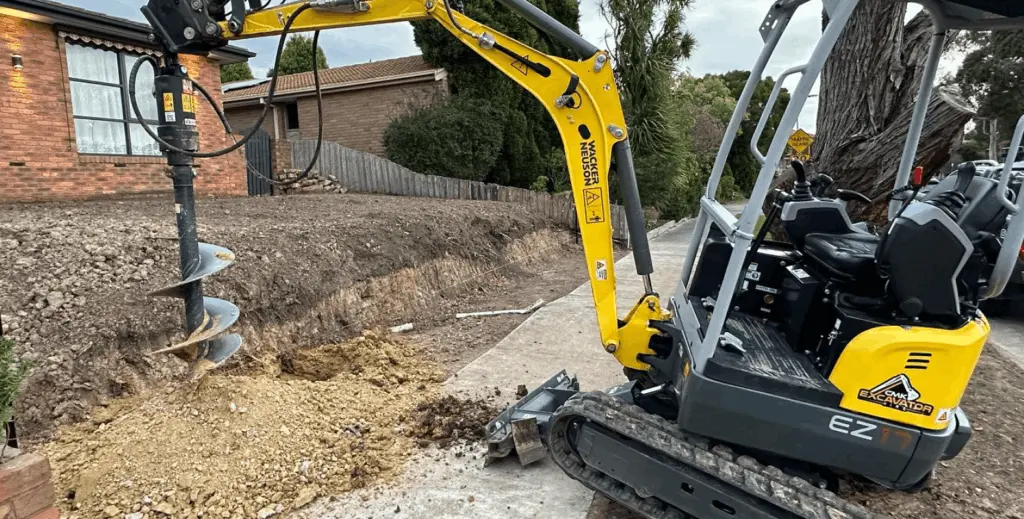
Getting the perfect hole is a surprisingly tricky job – whether you’re sinking fence posts after a long Melbourne winter, planting a new tree in Fitzroy Gardens, or laying the foundations for a deck in Hawthorn. Sure, you could grab a shovel or post-hole auger yourself, but without the right gear and know-how, you might end up with a lopsided fence line or an aching back.
That’s where professional hole digging services come in. In this guide, we’ll dig deep into all things hole digging – from when to hire a pro to the tools, techniques, and safety steps that ensure your holes are drilled right the first time. Think of it like having a friendly expert whisper in your ear as you plan your next DIY or construction project – without all the boring jargon.
What Is Professional Hole Digging?
Professional Hole Digging refers to the specialized process of creating accurately sized and positioned holes for construction, landscaping, agricultural, and infrastructure projects. Unlike manual excavation, professional services utilize specialized machinery and experienced operators to achieve consistent results while minimizing site disruption.
In Melbourne, Hole Digging is commonly used for fencing installations, deck footings, retaining walls, utility poles, tree planting, foundation preparation, and structural supports. The depth, width, and placement of each hole depend on the specific requirements of the project and local ground conditions.
The key difference between amateur excavation and professional Hole Digging is precision. Every hole serves a purpose. If dimensions are inaccurate, the entire structure above it may be compromised. Professional contractors understand soil behaviour, excavation techniques, and site safety requirements, ensuring every hole is prepared correctly from the beginning.
Why Hire Professional Hole Digging Experts?
You might wonder, “Why pay someone to dig a hole?” Well, imagine you’re excited to build a backyard pergola – suddenly you find yourself on your knees with a rusty shovel in clay as hard as bikkie dough. A professional hole digger walks in with a mini-excavator or auger, and voila – perfect holes in minutes. Professionals bring high-tech augers and excavators that can handle Melbourne’s varied soils (from clay-heavy inner-city blocks to sandy patches in suburban fringes) quickly and accurately.
This isn’t just about convenience: it’s about safety and quality. WorkSafe Victoria warns that “excavated trenches pose a serious risk” and urges everyone to plan carefully before digging. Experienced contractors know exactly how to manage those risks – checking for utilities, shoring up deep holes, and following local rules. Hiring a pro means you get fast, clean digging with precise depth and placement – no sore muscles or surprise sinkholes.

Understanding Different Types of Hole Digging Services
Not all Hole Digging projects are the same. Different applications require specialized methods, equipment, and planning.
Post Hole Digging
Post hole digging is one of the most requested excavation services in Melbourne. It involves creating precisely sized holes for fence posts, gate supports, pergolas, and structural posts. Accuracy is critical because even minor alignment issues can affect the appearance and stability of the finished structure.
Professional post hole digging ensures consistent spacing, correct depth, and proper positioning, helping achieve a clean and durable installation.
Auger Hole Digging
Auger hole digging uses specialized drilling equipment fitted with rotating auger attachments. This method allows operators to excavate holes efficiently while maintaining uniform dimensions.
Auger hole digging is particularly useful in projects requiring multiple holes across a site. It provides excellent accuracy while reducing disturbance to surrounding ground areas.
Foundation Hole Digging
Foundation hole digging supports structures that require secure footings. These excavations often need to meet engineering specifications and local construction requirements.
Because foundations carry structural loads, precision becomes even more important. Professional Hole Digging ensures foundation holes are excavated to the correct depth and dimensions for long-term stability.
Manual Digging vs Professional Hole Digging
Many property owners initially consider handling excavation themselves. While small projects may appear manageable, professional Hole Digging offers several significant advantages.
| Manual Digging | Professional Hole Digging |
|---|---|
| Labour intensive | Efficient and precise |
| Time consuming | Faster project completion |
| Inconsistent depths | Uniform excavation results |
| Limited capability | Handles varied soil conditions |
| Greater physical effort | Specialized machinery does the work |
| Higher risk of errors | Accurate positioning and dimensions |
The difference often becomes clear once excavation begins. Professional Hole Digging reduces uncertainty and helps keep projects moving smoothly.
Common Hole Digging Projects
Professional diggers tackle all sorts of jobs around Melbourne homes and construction sites. Typical projects include:
- Fence and Deck Post Holes: Whether it’s for a backyard fence in Footscray or a pergola deck in Brighton, every timber post needs a snug, level hole. We specialize in fence post hole digging that’s just the right size.
- Foundation and Pier Holes: Decks, patios, or even a small pool need strong footings. This is where foundation hole digging and pier hole digging come in – deeper, wider holes poured with concrete for lasting stability.
- Tree and Planting Holes: Planting a big gum tree or a feature palm? Deep hole digging ensures roots have room to breathe, with soil mix advice so your tree doesn’t mind the Melbourne clay.
- Utility and Drainage Holes: Need holes for underground pipes, electrical conduits, or garden irrigation? Our hole drilling services cover clean, straight shafts for utilities, guided by all the right maps.
Each type of hole has its quirks – for instance, fence holes are usually narrow but deep enough for concrete, whereas footing holes might be wide and need careful shoring. No matter the task, professionals match the method to the job to deliver sturdy, code-compliant holes every time.
Equipment and Techniques for Efficient Digging
Modern hole diggers use machines you might not see in your usual backyard: mini excavators fitted with hydraulic augers, capable of drilling perfect cylindrical holes with the push of a button. These machines save a world of effort compared to manual spading. For smaller spots or tight corners, there are handheld power augers (imagine a giant mechanical corkscrew) and even battery-powered post-hole drills.
No matter the method, professionals rely on proven techniques. First up is site preparation: clearing debris, marking out hole positions, and checking the soil. If the ground’s rocky, we might switch from an auger to a braked rock drill. Once digging starts, depth gauges or laser levels ensure each hole hits the exact depth needed (say, below the frost line or 600mm for typical posts) – and it’s done in one pass, not constantly stopping to measure.
Professionals also handle the muck safely. Excavators lift soil into trucks or wheelbarrows, keeping the site tidy. And for large jobs, we rotate machines and crews, so fatigue doesn’t lead to mistakes. In short, you get efficiency plus the benefit of experience: the right auger size, the right angle, and the right follow-up (like backfilling with gravel or concrete) all come built-in.
Safety, Planning, and Permits
No matter how small your hole might seem, digging is regulated and requires caution. Before the first shovel hits dirt, certified pros treat each project like a mini construction site. We start by planning and identifying hazards. As Safe Work Australia notes, a crucial first step is knowing what lies underground – gas pipes, telecom cables, water mains or septic tanks – “Information about the location of these and other underground services… must be established before excavation work.” That’s why professionals always pull utility plans or hit the Before You Dig Australia portal (the government-backed database) to locate underground lines.
In Melbourne, you also keep local rules in mind. Generally, digging holes for something like a new fence post on your property doesn’t require a council permit, but it’s smart to double-check. Some neighborhoods have rules for stormwater drainage or protected trees, and most fences above a certain height will need a building permit. We’ve got the experience to navigate these details, so you won’t accidentally breach a local law.
And of course, safety gear and risk controls are a must. Our teams wear helmets, boots, gloves – the lot – and if a hole is very deep, we use shoring or benched sides to prevent collapses. WorkSafe Victoria tells us to “plan, prepare, prevent and protect” on every job site, and that’s exactly what we do. All machinery is inspected, and we follow a Safety Method Statement (SWMS) before starting heavy dig work. The bottom line: when you hire professionals, you’re not just paying for strength; you’re paying for that “peace-of-mind package” of rules-following, insurance-backed expertise.
Melbourne Soil and Site Considerations
Melbourne’s known for a few things – great coffee, unpredictable weather, and often heavy clay soil. This clay can hug onto moisture in winter, making it either like damp play-dough or a very sticky mess, depending on the day. Our pros know how to handle it. For example, clay-heavy holes might need weeping drain rock at the bottom to improve drainage, since clay holds water. On the other hand, sandy patches (more common near the bayside suburbs) drain like a dream but sometimes need careful consolidation so posts don’t slowly sink.
Seasonal tips matter too. Melbourne’s rainfall peaks in winter, so a hole left open can fill with rain. We advise clients to cover freshly dug holes or dig just before installation. Local shrink-swell soil (common in outer suburban areas) also means extra backfill finesse: we use a mix of compactable soils and, if needed, concrete to minimize future shifting as the subsoil expands and contracts.
Space and access are another Melbourne quirk. In packed suburbs, your backyard might be accessible only through a side gate or even via the front. This is where our mini excavators and narrow augers shine – they fit through tight laneways and narrow backyards. We also handle high-rise apartments in the city: digging pier holes on a rooftop or basement using smaller cranes or electric augers. No matter the plot, local experience means we pick the right setup so your project isn’t derailed by a narrow driveway or a rock wall.

Why CMK Excavations & Hire is Your Best Bet
You’ve probably guessed by now, but at CMK Excavations and Hire, hole digging isn’t an occasional task – it’s our bread and butter. We’ve spent years getting to know Melbourne’s soil and suburbs, from the Yarra Valley out to the city fringe. Our small-but-mighty team treats your backyard like it’s our own: full site clean-up, respect for gardens, and sticking to deadlines even in changeable Melbourne weather.
What really sets us apart? It’s our blend of modern gear and down-to-earth service. We pair high-performance diggers and drillers with human advice you can trust. For instance, just last month a customer in Brunswick had us dig several holes for deck posts; they needed precision because the deck would connect to an old brick wall. Our operator used a laser-guided auger attachment to get every hole spot-on, which saved time and avoided cracks in the heritage masonry.
In short, we bring speed and smarts. We’ve seen it all: buried tree roots, surprise concrete footings from the 1970s, and even stray car bodies. If there’s a challenge, we solve it with equipment upgrades or a quick consultation with local engineers or utility owners. And we make it easy for you: one call or message and we’ll come out with everything needed – site inspections, council paperwork, and a free no-obligation quote. So relax, have a cuppa, and let us do the digging.
Conclusion
Professional Hole Digging is far more than simply creating holes in the ground. It forms the foundation for successful construction, landscaping, fencing, and infrastructure projects across Melbourne. From post hole digging and auger hole digging to foundation hole digging, pier hole digging, and deep hole digging, every excavation requires precision, planning, and expertise. When performed correctly, Hole Digging supports structural integrity, improves project efficiency, and helps ensure long-lasting results.
If you’re planning a residential, commercial, or landscaping project in Melbourne, trust the experienced team at CMK Excavations and Hire. Our professional Hole Digging services are designed to deliver accurate, dependable excavation solutions tailored to your specific requirements. Contact CMK Excavations and Hire today and discover how expert Hole Digging can help bring your project to life with confidence.
FAQs
1. What is the difference between post hole digging and foundation hole digging?
Post hole digging typically focuses on creating holes for fence posts, gates, pergolas, and similar structures. Foundation hole digging is designed for structural supports and footings that carry significant loads. While both involve excavation, foundation holes often require greater precision and compliance with engineering specifications.
2. When should I use auger hole digging instead of manual excavation?
Auger hole digging is ideal when multiple holes need to be excavated efficiently and consistently. It provides accurate dimensions and works particularly well in challenging ground conditions where manual digging would be slower and less reliable.
3. Can professional Hole Digging be used for landscaping projects?
Yes. Professional Hole Digging is commonly used for tree planting, retaining walls, pergolas, garden structures, and outdoor improvements. Accurate excavation helps ensure long-term stability and supports healthy landscape development.
4. Why is deep hole digging more complex than standard excavation?
Deep hole digging requires specialized equipment, careful planning, and experienced operators. Greater depths introduce additional considerations related to soil stability, safety, and excavation techniques, making professional expertise essential.
5. How do I prepare my site before Hole Digging begins?
Site preparation usually involves identifying underground services, clearing access areas, and discussing project requirements with your contractor. Professional excavation teams can guide property owners through the preparation process to ensure safe and efficient operations.
